Why a Sales Forecast Template is Your Business’s Best Design Asset
When you think about design assets for your business, your mind probably jumps to logos, brand colors, or website layouts. But there’s one tool that deserves a spot in your creative toolkit just as much: a well-structured Sales Forecast Template. It’s not just a spreadsheet; it’s the visual blueprint for your financial future, a piece of functional design that brings clarity and strategy to your growth plans. For the entrepreneur, freelancer, or small business owner, it’s the unsung hero of your operational design system.
The Visual Personality of Clarity
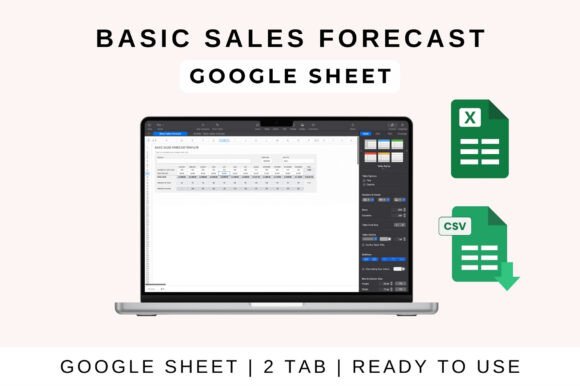
A great sales forecast template has its own distinct personality. Think of it as the sans serif font of your financial documents—clean, modern, and highly readable. Its visual style is defined by a logical layout, consistent spacing, and a clear hierarchy that guides your eye from product listings to monthly totals. There’s no decorative flair for the sake of it; every cell and column serves a purpose, much like the best modern typography. This isn't about being flashy; it's about being effective. The "appeal" lies in its ability to transform complex data into an at-a-glance story of your business's potential.
This template is your brand identity for numbers. Just as a premium font ensures your messaging is perceived with professionalism, a solid forecast sheet ensures your financial projections are taken seriously. It establishes a consistent visual hierarchy, where key metrics like total revenue and profit margins are immediately prominent. This consistency builds trust, both internally for your team and externally when you're sharing plans with partners or investors. It’s the difference between a scattered collection of notes and a polished, coherent business plan.
Where This Tool Truly Works
The applications for a Sales Forecast Template stretch far beyond a simple year-end budget. It’s a dynamic design asset for multiple scenarios. In editorial design terms, it’s the detailed outline for your business’s narrative. For packaging design of a new product line, it helps you model pricing and projected volumes before you commit to production. In web design and social media graphics, the insights from your forecast can inform your marketing spend and campaign timelines.
Imagine you’re planning a new collection. Your forecast template lets you list each product, set its price, and estimate monthly unit sales. The automatic calculations show you the revenue path, helping you decide on inventory levels and marketing pushes. This is practical, real-world planning. It’s the tool you use before you brief a designer on new packaging design or before you allocate budget for a social media ad campaign. It informs the creative process with hard data, making your visual decisions more strategic and grounded.
Making It Your Own: Practical Guidance
Choosing and using a sales forecast is like selecting a creative font for a major project. You need to evaluate its fit. Does the template’s structure align with how you actually sell? A service-based freelancer will need different line items than a product-based e-commerce store. Test the template with a small data set first. Does it flow logically? Are the formulas working as expected? This is your font pairing test—ensuring the core structure (the serif font of stability) works with the dynamic data you input (the display font of your specific numbers).
Look for templates that offer flexibility. The ability to add or remove categories, adjust timeframes (monthly, quarterly, yearly), and customize the visual presentation is key. A good template should come with clear instructions, much like the documentation for a commercial font. Check the licensing—can you use it for multiple business ventures or client projects? Most importantly, ensure it works in your preferred environment, whether that’s Google Sheets for collaboration or Excel for desktop power. The best template is the one you’ll actually use consistently, turning financial planning from a chore into a clear, actionable part of your business design process.
Ultimately, a Sales Forecast Template is more than a spreadsheet. It’s a foundational design asset that brings the same principles of good typography—clarity, hierarchy, and purpose—to your financial planning. It’s the tool that helps you design a sustainable future, one calculated projection at a time. By integrating it into your workflow, you’re not just tracking numbers; you’re architecting growth with the same care and intention you bring to your visual brand.