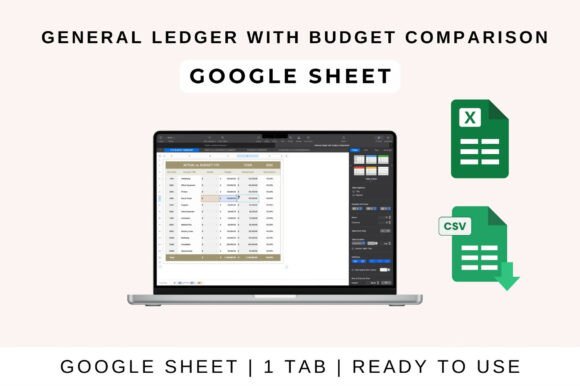
Master Your Finances with a General Ledger Template
For any creative entrepreneur, freelancer, or small business owner, the freedom of running your own venture is exhilarating. But that freedom often comes with a shadow: the looming task of financial management. Spreadsheets can feel overwhelming, and without a clear system, it’s easy to lose sight of where your money is actually going. The key isn’t just tracking numbers; it’s understanding the story they tell about your business’s health. A well-structured General Ledger with Budget Comparison is the tool that transforms financial data from a source of stress into a map for growth.
What is a General Ledger and Why Does it Matter?
Think of a general ledger as the master record of your business’s financial life. It’s a comprehensive document where every single financial transaction—from a client payment for a design project to the cost of new software—is recorded. While a simple income and expense tracker shows cash flow, a general ledger provides the full picture, organizing transactions by account (like Sales, Marketing, Software Subscriptions, or Office Supplies). This financial template is the foundation for generating accurate financial statements, like your Profit & Loss report.
The true power of this template, however, lies in its budget comparison feature. You’re not just logging what you spent; you’re comparing your actual spending vs. budget in real-time. This is where financial clarity happens. Did you overspend on advertising last month? The variance is automatically calculated, highlighted for you. Are you consistently under-budgeting for professional development? The data will reveal that pattern. This isn't about restriction; it's about making informed decisions. For a graphic designer, seeing that 30% of their software budget was eaten up by unused subscriptions can prompt a valuable cleanup. For a marketing consultant, tracking project-specific expenses against a budget helps ensure profitability on every engagement.
Visual Clarity and Functional Design
Just like a well-designed typeface, a great financial tool should be both beautiful and highly functional. This General Ledger with Budget Comparison template embraces a clean, modern aesthetic. Its visual design prioritizes readability and visual hierarchy. Categories are clearly delineated, columns are logically spaced, and the use of color is strategic—perhaps green for under-budget, red for overspending—to draw your eye to what matters most without overwhelming the page.
This approach to layout is a form of modern typography applied to data. It understands that how information is presented is as important as the information itself. The typeface used within the sheets is likely a clean sans serif font, chosen for its legibility in dense numerical grids and its contemporary, professional feel. This mirrors trends in web design and digital design where clarity and user experience are paramount. The template’s “personality” is one of quiet confidence and efficiency—it’s a tool designed to get out of your way and let the data speak.
Practical Applications for Your Creative Business
The versatility of this design asset makes it invaluable across numerous professional contexts:
- Freelancers & Consultants: Use it for project-based accounting. Create a separate sheet for each client project to track billable hours, expenses, and profitability against your initial estimate. This simplifies invoicing and provides clear insights into which types of projects are most lucrative.
- Small Business Owners: Manage your monthly and yearly summary views to understand seasonal trends. A boutique shop owner can compare holiday season spending on inventory against the yearly budget, while a café owner can track fluctuating food costs.
- Agencies & Studios: Maintain oversight across multiple accounts or departments. The ability to share and collaborate in real-time (when using Google Sheets) makes it easy for a bookkeeper and a studio manager to work from the same, always-updated numbers.
- Content Creators & Bloggers: Track income from various streams (ad revenue, sponsorships, affiliate links) and expenses for equipment, travel, and advertising. The auto-calculate variances feature quickly shows if your content production costs are in line with your goals.
Integrating the Template into Your Workflow
Getting started is designed to be seamless, whether you prefer Google Sheets, Excel, or Apple Numbers. The process is straightforward: upload, input, and analyze. The real magic, however, lies in customization. Just as you would select a premium font to match your brand identity, you should tailor this ledger to your business’s unique rhythm. Adjust the income and expense categories to reflect your specific operations—rename “Marketing” to “Social Media Ads” or “Client Gifts” if that’s more precise. The formulas are built to adapt.
Think of this template not as a rigid document, but as a foundational font pairing for your finances. The “headline” is your budget goal, and the “body copy” is your actual transaction data. Together, they create a clear, compelling narrative. The professional consistency it brings to your financial reporting can enhance your brand perception with partners and lenders. Internally, it fosters a culture of accountability and strategic planning. By regularly reviewing your budget vs. actuals, you move from reactive firefighting to proactive growth planning. You’ll spot opportunities to reallocate resources, celebrate financial wins, and course-correct with confidence before minor issues become major problems. This is the essence of financial empowerment for the modern creative professional.