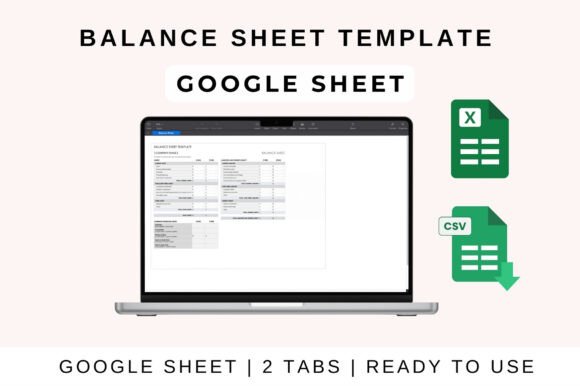
Master Your Finances with a Balance Sheet Template in Google Sheets
For any entrepreneur, freelancer, or small business owner, the financial pulse of your operation is often found in the details. You might have a great idea and a strong marketing plan, but without a clear view of your assets, liabilities, and equity, you're navigating without a map. This is where a well-structured Balance Sheet Template becomes an indispensable tool, transforming complex numbers into a clear financial snapshot. When this template lives in Google Sheets, it gains the power of accessibility and collaboration, making it a cornerstone of modern financial management.
The Anatomy of a Professional Financial Tool
Think of a balance sheet as a financial photograph taken at a specific moment in time. A premium template designed for Google Sheets provides the frame and structure for this photograph. Its visual characteristics are all about clarity and order. You won't find flashy graphics or decorative elements here. Instead, its appeal lies in a clean, professional layout with distinct sections, logical categorization, and intuitive navigation. The "personality" of this template is one of reliability and precision. It's a sans serif font in the world of documents—functional, modern, and highly readable, ensuring that the data, not the design, is the star.
This tool's style is inherently versatile. Whether you're a sole proprietor tracking your first year of expenses or a growing startup preparing for an audit, the template's structure is built to adapt. It separates your business's resources (Assets) from what it owes (Liabilities) and the owner's residual interest (Equity), providing the fundamental equation that drives all accounting. The overall appeal is its ability to demystify finance, presenting it in a structured, manageable format that feels less intimidating and more empowering.
Where This Template Truly Shines: Real-World Applications
The true value of a Balance Sheet Template Google Sheets file is realized in its application across diverse business scenarios. It's not just for year-end reports; it's a living document for ongoing strategy.
- For the Creative Entrepreneur and Small Business Owner: This is your command center. Use it to track the value of your equipment and inventory (assets), manage loans and accounts payable (liabilities), and see your true ownership stake. It's crucial for making informed decisions about purchasing new equipment, hiring help, or applying for a business loan. Lenders and potential investors will look for this document to gauge your financial health and brand identity as a stable entity.
- For Accountants and Finance Teams: The template's automated calculations and standardized format are a game-changer. It minimizes manual errors, ensures consistency in reporting, and dramatically speeds up the preparation of financial statements. This efficiency allows professionals to focus on analysis and strategy rather than data entry. The compatibility with MS Excel and Apple Numbers also means it integrates seamlessly into existing workflows.
- For Project-Based Work and Audits: Before pitching to a large client or undergoing an audit, a clean balance sheet demonstrates professionalism and preparedness. It provides a verified summary of your company's financial position, building trust and credibility. It's a key piece of your business's design assets—not visual, but foundational to your professional presentation.
Practical Guidance: Implementing and Customizing Your Sheet
Getting started is straightforward, but maximizing its potential requires a thoughtful approach. First, upload the template to your Google Drive and open it in Google Sheets. This simple step makes it accessible from any device and enables powerful collaboration features.
When you enter your data, think in terms of categorization. The template will have pre-built sections, but the real power comes from customizing these categories to fit your specific business. A graphic designer might have a category for "Software Subscriptions" under assets, while a retailer would have "Inventory." This customization is where the template becomes a true reflection of your business model.
As you input figures, the automated calculations will handle the math, but always review the totals. Ensure your Assets equal the sum of your Liabilities and Equity. This is the golden rule of balance sheets. Use the share and collaborate function to bring your accountant or business partner into the sheet for real-time updates and reviews. This eliminates version control headaches and ensures everyone is working from the same financial truth.
Remember, the goal is not just to fill in boxes, but to create a document that tells the story of your business's financial journey. Regularly updating your balance sheet—monthly or quarterly—turns it from a static report into a dynamic planning tool. It helps you spot trends, manage cash flow proactively, and make strategic decisions with confidence. In the ecosystem of business tools, a robust Balance Sheet Template in Google Sheets is less of a luxury and more of a necessity for anyone serious about building a sustainable and successful venture. It brings the discipline of modern typography to finance—clean, structured, and built for clear communication.